Friday, 23 October 2009

Malaysia Royal Navy gets delivery Scorpene class sub

Husna Yusup and Meena L Ramadas

Malaysia began negotiating for the acquisition of 2 submarines from Armaris of France and Navantia of Spain in 1998 and signed the 1.084 billion euro deal in June 2002. The deal provoked controversy when people who were involved in the deal filed a lawsuit against a friend of PM Najib Tun Razak, who was defence chief at the time had been designated as the main negotiating agent for the deal. The purchase was made without going through a tender.

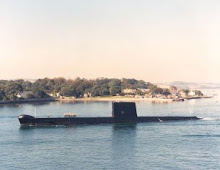
The first submarine KD Tunku Abdul Rahman, a Scorpène class, docked at Port Klang on Sept 3 2009. The Malaysian Royal Navy announced that it may acquire more submarines in the future.

Monday, 5 October 2009

Nuclear submarine collission: Vanguard and Le Triomphant

(Collision between a French submarine and a British submarine)

"They drive on the left side even down here?!
"

Britain and France say two of their nuclear-armed submarines, HMS Vanguard (first photo) and Le Triomphant (second photo), collided while submerged in the Atlantic earlier this month. BBC News examines how and why this happened, the BBC reported.

What happened?

The head of the UK's Royal Navy, Admiral Sir Jonathon Band, said HMS Vanguard and the French submarine, Le Triomphant, collided at slow speed while on separate routine patrols in the Atlantic Ocean.

Both submarines were badly damaged and had to return to port for repairs: HMS Vanguard (first photo) with what are described as visible dents and scrapes, Le Triomphant (second photo) with a damaged sonar dome.

[..] Factfile: How submarines use sonar [...]

A blog post on the collission here.

First SSBN HMS Resolution 1967

First SSBN HMS Resolution arrives in Faslane 1967First SSBN HMS Resolution arrives Faslane 1967

Polaris fired from HMS Revenge

A UGM-27 Polaris submarine-launched ballistic missile is launched from the British submarine HMS Revenge (S27).

The British Strategic Systems Programs here

Nuclear submarines

Vanguard
From The Times:

Faslane on the Clyde is to become the dedicated home for the UK's entire nuclear-powered submarine fleet in a shake-up of Royal Navy resources that will also bring the next generation of frigates to Portsmouth instead of Devonport.

All of Britain's nuclear-powered submarine force will relocate to the base north of Glasgow over the next few years in a move that guarantees the future of the 6,000-strong workforce at Faslane. It is hoped it will also mean jobs for hundreds more maintenance and support staff. Faslane already plays host to four Vanguard-class Trident nuclear-armed submarines.


Astute
From The Daily Telegraph:
"The Astute class submarines are the next-generation nuclear fleet submarines of the Royal Navy. When completed, the boats will set a new standard for the Royal Navy in terms of weapons load, improved communications facilities, stealth and comfort for the crew."

Trident
According to MoD:
The white paper said that designing and building four new submarines would cost between £11bn and £14bn. This is set against the estimated £70bn or more defence officials say the proposed replacement of the existing Trident system, including new missiles and warheads, would cost over its 30-year lifetime.

Wednesday, 17 June 2009

HMS RESOLUTION

About HMS Resolution

HMS Resolution (S22) was the first of the Royal Navy's Resolution-class ballistic missile submarines. Ordered in May 1963, she was built by Vickers Armstrong at a cost of £40.2m.

The keel was laid down on 26 February 1964 by the Director General Ships, Sir Alfred Sims, and the launch was on 15 September 1966, attended by Queen Elizabeth the Queen Mother.

The submarine was commissioned on 2 October 1967, and following extensive trials, including the firing of her first Polaris missile on 15 February 1968, commenced her first patrol on 15 June 1968.

Her Polaris system was updated in 1984 with the Chevaline IFE (Improved Front End) that included two new warheads and re-entry bodies and penaids, super-hardened to resist ABM attack, replacing the original three ET.317 warheads.
Resolution conducted the longest Polaris patrol of 108 days in 1991.

Following the completion of the first Trident submarine in 1992, the Resolution class were gradually removed from service. Resolution was de-commissioned on 22 October 1994, after 69 patrols, and laid up at the Rosyth Dockyard.

FACTS and FIGURES

    Displacement:

    surfaced 7,500 tons; submerged 8,400 tons.

    Length:425 ft (130 m)

    Beam:33 ft (10 m)

    Draught:30 ft 1 in (9.2 m)

    Propulsion:1 × Vickers/Rolls-Royce PWR.1 pressurised-water nuclear reactor, 27,500 shp (20,500 kW); Propeller.

    Speed:surface - 20 kn (37 km/h); submerged - 25 kn (46 km/h)

    Range:Unlimited except by food supplies

    Complement:143 (two crews)

Polaris Submarines

The mid 1950s development of the submarine launched Polaris ballistic missile by Lockheed and the US Navy led, eventually, to the signing of the Polaris Sales Agreement between Prime Minister Harold Macmillan and President John F Kennedy.

Resolution

Resolution

It was decided that the United Kingdom would have four Polaris submarines to carry the latest A-3 missiles; that the submarines would be British designed and built; that the whole weapon systems and equipment, except warheads, would be purchased from the United States; and that the warheads would be British. The Government directive was explicit; the four SSBNs (Ship Submersible Ballistic Nuclear) were to be deployed at the earliest possible date and the programme executed within the allotted budget. 'A challenge had been issued and a challenge was going to be met'.

The programme was authorised in February 1963; the submarines were to be built in pairs, with maximum speed, by Vickers (Lead Yard) and Cammell Laird. The order for a fifth SSBN was announced in 1964, but was cancelled by a new Government the following year. The keel of the first of class, HMS Resolution, was laid down at Barrow on 26th February, 1964, and represented for Vickers the sternest test the yard had had for many a year.

Repulse

Barrow's second Polaris Sub - Repulse

The planning and design effort which went into the Polaris submarine programme was colossal 500 000 man-hours of planning, preparation of more than 10 000 carefully detailed drawings all to be translated into the physical business of construction. Additionally, a full-scale wooden 'mock-up' was built. Not only did this allow the exact positioning of any piece of equipment to be planned and the routes for cables, pipes and trunking to be decided, but when the crew arrived to stand by their ship, they were able to train on the mock-up and become familiar with their new charge before they even set foot aboard her.

Unit in shed

A Resolution unit under construction in the Assembly Shed

In constructing Resolution, the hull was assembled on the berth from sections prefabricated in the Assembly Shop. The fore and aft parts of the ship were built up simultaneously, and into the space between were placed the prefabricated missile sections, complete with missile tubes. Thirty months was the time occupied from keel laying to launch - which was carried out by Her Majesty Queen Elizabeth The Queen Mother on 15th September 1966.

Resolution launch

Resolution launch

The autumn of 1967 was an important one in the history of Vickers. Resolution, having successfully completed her Contractors' Sea Trials, was accepted into the Fleet on 2nd October.

To provide an operational submarine of completely new design, with a complete weapon system from the United States and with adequate support facilities, within 4½ years of ordering the vessel, was a truly remarkable performance. 'Vickers' workforce had met their challenge!'

Hard on the heels of Resolution's delivery to the Fleet came the launch of Repulse, on 4th November. This launch was not accomplished without one of those heart pounding incidents which sometimes accompany these occasions. Repulse decided to elude the waiting tugs and remain on display in the Walney Channel until the next high tide.

Repulse was fitted-out in Devonshire Dock, and joined the Fleet, ahead of time, on 28th September, 1968. Her sister ships, Renown and Revenge, built at Cammell Laird, were commissioned in November 1968 and December 1969, respectively.

ALL ON TARGET

One of the most important events in the work-up of a Polaris submarine was the Demonstration and Shakedown Operation (DASO), which was conducted off Cape Kennedy in Florida. This operation culminated in the firing of a Polaris missile down the US Air Force Eastern Test Range to a target up to 2500 nautical miles away. The Ministry of Defence planned, in 1963, to fire Britain's first Polaris missile at 11.15 Eastern Standard Time on 15th February 1968 - HMS Resolution failed to achieve this by 15 milliseconds, but the firing was otherwise fully successful!

Polaris Missle

The firing of HMS Resolution's second Polaris A-3 on April 3rd 1968

VIGILANCE MAINTAINED

Being the United Kingdom's contribution to NATOs strategic nuclear deterrent, at least one Polaris submarine was constantly on patrol, sailing submerged 'one knows not where', but always carrying her deadly 'cargo' of two-stage ballistic missiles.

'Sherwood Forest' was the nickname given to the compartment housing these 16 missiles, which were 31 feet long, 4½ feet in diameter and weighed 28000 pounds. Fired from the submerged submarine, the multiple nuclear warheads could soar into the stratosphere and devastate a target 2500 nautical miles away. One Polaris submarine carried more destructive potential than the total amount of explosives expended by all sides in the Second World War.

When a Polaris submarine headed out into the open sea, the crew settled down to a life of routine, where days passed relatively quickly, but time seemed to stand still. Their main activities were devoted entirely to ensuring that the secrecy of their position was preserved, and that the deadly missiles were always ready to fulfil their ultimate purpose. To make the fullest use of Polaris submarines, each had two crews - known as Port and Starboard - which took turn and turnabout in the two-month patrol cycle.

Food assumes an importance beyond its intrinsic value, and plays a large part in influencing the morale of those onboard. From the small galley of a Polaris submarine, three cooked meals a day were prepared for the 143 officers and men - in an eight-week patrol, the equivalent of feeding a family of four for five years.

The primary source of power for Polaris submarines was a pressurised water nuclear reactor, which provided steam for the propulsion turbines and turbo-generators. Systems for everyday running range from high and low voltage electrical power, steam, hydraulic, pneumatic, lubricating oil and water for essential ship's services, to freshwater, air-conditioning and refrigeration for domestic purposes. A network of communications and control systems is used for the transmission of information, for direction of remote services, and for round-the-clock monitoring of conditions throughout the ship.

THE COST OF PEACE

Polaris submarines were designed to carry, and maintain in a state of readiness to fire, 16 Type A-3 Polaris missiles in addition to their conventional torpedo armament. The Admiralty believe that if the missiles were ever employed they will have failed in their purpose of preventing war. But to quote Vice-Admiral Sir Hugh Mackenzie (ex Chief Polaris Executive): 'it is no use pretending to be able to do the job. The stakes are too high to rely on bluff.

Such was the fearsome capability of HMS's Resolution, Renown, Repulse and Revenge that, even in peacetime, the 'opposition' was extremely unlikely to subscribe to that proverbial saying 'Out of sight, out of mind'.

Some of the above information kindly donated by the Barrow-in-Furnace Submarine Association you can visit their site here.

http://www.hmsresolution.org.uk/about/about.htm


Tuesday, 16 June 2009

ROYAL NAVY SUBMARINES

The Royal Navy's submarine force can strike against ships and submarines as well as providing support for land operations. Unseen and unheard submarines can pinpoint targets up to 1,000 miles away. They are the UK's strategic nuclear deterrent.

1901

Holland one, the Royal Navy’s first submarine, fitted with a single torpedo tube, was born at Vickers, Sons & Maxim Ltd. (now BAE Systems Marine, Barrow) amidst great controversy in an era when the submarine was regarded as the weapon of the weaker power. ‘Submarining was no occupation for a gentleman’.


1902-08

Submarines quickly became established in the fleet but were still regarded with some disdain despite the fact that they had sounded the death-knell for the mighty DREADNOUGHTS. Even so they still remained relatively primitive craft with three white mice warning of dangerous petrol exhaust gases.

1908-14

Diesel engines made them safer and longer ranged. Boats became bigger and more powerfully armed. Although viewed primarily as defensive platforms, forward thinkers such as Lord Fisher pushed for the ‘overseas’ and ‘fleet escort’ submarine

1914-18

The Royal Navy entered WWI with 100 submarines. Many famous exploits completed (five Victoria Crosses won) and a number of future admirals made their mark (eg Max Horton). Losses (54 boats) were relatively severe

1918

A time of experimentation which saw submarines being driven at high speed by steam propulsion; one being fitted with a 12 inch gun; and another carried its own aircraft. Many of these submarines were lost in peacetime accidents. Thus the first stab at the ‘fleet escort’ missed its mark

1918-39

A period of consolidation. Overseas squadrons were established which maintained British presence around the globe. A significant number of new classes of submarine were built to fulfil the task.

1939-45

The Royal Navy entered W.W.II with 100 submarines. Many campaigns fought and won but at tremendous cost and sacrifice. Chances of not returning from patrol during 1943/44 were 65%. Nine Victoria Crosses were won. Once again many post war admirals emerged from the ranks of the survivors

1945-58

Start of the Cold War. Ageing submarines held the line, but it was recognised, not least by Earl Mountbatten, that nuclear power held the key to counter the growing, eventually huge, Soviet submarine threat.

1958

HMS DREADNOUGHT was built in Barrow by Vickers. She established a line of outstanding SSNs (nuclear powered fleet submarines) which were to play a pivotal role during the cold war. Their contribution, in partnership with their USN colleagues, was to confront the potential enemy wherever he went.

1968

HMS RESOLUTION conducted the first of 229 unbroken Polaris deterrent patrols. This was a brilliant achievement and vital to the national interest at a time of great global uncertainty.

1982
RN submarines, most notably HMS CONQUEROR, played a vital part during the Falklands conflict. The Commander in Chief was Admiral of the Fleet Lord Fieldhouse (the most senior submariner in history), and the task group was commanded by another submariner, Admiral Sir Sandy Woodward

1991

The cold war, fought to a great degree beneath the waves, was won.

1995

Strategic nuclear deterrent patrols continue with the first Vanguard Class patrols, equipped with ‘Trident’ ballistic missiles.

Astute Class

2001+

2001 marked the laying down of Astute - the first of a new generation of attack submarines that will never require refuelling at any time throughout their 25 year service history. The proud and powerful descendants of the tiny Holland One, equipped with ‘Trident’ ballistic missiles, Tomahawk land attack missiles, Sub-Harpoon anti-ship missiles, and GEC-Marconi Spearfish torpedoes maintain the vigil for peace............

A TRIBUTE TO THE PAST

The Royal Navy Submarine Museum looks after the heritage of a remarkable service whose reluctant conception and fragile birth into the Royal Navy in 1901 established the fighting service that today operates the most powerful ships in the Fleet and maintains the strategic and sub-strategic National Deterrent.

How we are regarded:

Admiral Sir Arthur Wilson VC

"The crews of all submarines captured should be treated as pirates and hanged".

The words of Admiral Sir Arthur Wilson VC, the Controller of the Navy, reveal why the Jolly Roger is the emblem of the Royal Navy Submarine Service. The Museum celebrates those pioneers who daily risked their lives to prove the submarine a viable and successful craft. By the end of World War 1 the submarine had truly come of age. Five of the Service’s fourteen Victoria Crosses had been won, the first by Lieutenant Norman Holbrook, Commanding Officer of HMS B11.

Rudyard Kipling recognised the extraordinary social change that the submarine had brought about in the Royal Navy when he wrote ....the submarine has created its own type of officer and man - with language and tradition apart from the rest of the Service, and yet at heart unchangingly of the Service.

By the end of World War Two the Submarine Service had added a further nine Victoria Crosses and numerous battle honours to an ever growing list. Winston Churchill recognised the courage and sacrifice of the men of the Submarine Service when he said Great deeds are done in the air and on the land, nevertheless there is no part to be compared to your exploits.

Since the end of the Second World War the Royal Navy Submarine Service has assumed the role of Peacekeeper. Its Attack and Deterrent submarines played a vital role during the Cold War and the contribution these vessels have made were to be summed up by the Daily Telegraph in 1967 HMS Resolution, in making the first dive of her patrol into the waters of a troubled world, will be taking out on behalf of the nation the best insurance policy it has ever had.

http://www.solarnavigator.net/royal_navy_submarines.htm